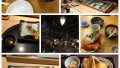

You will have to kill your long time for transit in Haneda airport. Or you will stay nearby due to the flight schedule?
First of all, I am very local to Haneda. I was born and grew up in this area where my parents had settled for my father’s job (my father used to do an importing business, so it was convenient for him to have an office nearby the airport in the beginning, but eventually he had to drive to another airport – Narita – more often).
Haneda is… not a tourist place at all. Not posh, actually opposite. I went to a private middle/high school which took about 40 minutes by train because the local school was full of naughty kids (smoking, fighting, skipping classes and so on) and my parents were worried. But it’s still Japan, so safe. Don’t worry!
So if you are tired of “tourist attractions” and are curious about a different part of real Japanese society, getting out of the Airport and exploring around Haneda – Kamata is a good option.
Today, I am writing based on this article from my Japanese blog which I wrote this year.
Ramen – nostalgic one; fish base soup , very energetic type ;Pork bone base soup or Chinese spicy type ;Szechwan
Honestly, I’m not a big fan of Ramen anymore. I rather prefer Udon noodle now, but I used to explore a lot of Ramen shops when I was young.
Ramen is actually a very casual meal among Japanese people, so this area has many local canteens specialized in Ramen. Haneda Airport has some branches of popular Ramen shops, but eating there is a bit different from the normal Japanese lives. If you have many hours until your next flight, why don’t you try “an ordinary Ramen canteen” here?
Sato – dried fish based soup. Mild and nostalgic taste!
The full name of this shop is “Chuka-soba Sato” which means “Chinese noodle Sato”. As you know, Ramen is originally from China. After Japan opened the door to the world in the 19th century, Chinatown emerged in major port cities like Yokohama, Kobe and Nagasaki, then Ramen rapidly spread throughout Japan, and each region has its own specific style.
(see the example I wrote in this blog )
Sato’s Ramen is the most basic type in Japan, the soup stock is dried fish. Somehow it is highly ranked among Ramen lovers who travel there by train! When I found out that, I felt proud as a local person!
To go to Sato,Take Keikyu Line from the airport and get off at Anamoriinari Station, which is right after Tenkubashi Station. Then it just takes a 5-minute walk to get there.


The price was 600 JPY and I added the egg with an extra 100 JPY.
I saw some popular Tonkotsu (Pork bone based soup) type Ramen shops in NYC, London and Paris, but it was the late 90’s that Tonkotsu became common nationwide in Japan.
It used to be specific to Kyushu region, and in the beginning, people from east side (like Tokyo) found it too greasy. Actually my parents cannot eat it because of their fragile digestive system.
Sato’s Ramen is rather traditional for most of Japanese people, it has a very mild taste.
Even though I don’t eat Ramen so often in recent years, I still sometimes eat this nostalgic Ramen here!
By the way, surprisingly Japanese Curry is also available in this diner. You can order it with Ramen.
Japanese Curry is also the food which was invented with the inspiration of another country’s food and became a daily casual meal in Japan… not directly from India, it came by way of the UK because Japan in the 19th century was greatly influenced by Europe, especially the UK, France, and Germany.
Genryu – it’s for the guys who are so hungry
Genryu’s Ramen is the Tonkotsu type, so exactly opposite type to Sato.
Take Keikyu Line and get off at the 3rd station (Ootorii Station) to arrive only a 10-minute walk away from this canteen.

From my knowledge, this canteen is popular among workers such as truck drivers. I am a woman around 40 years old, so I am not too fond of this canteen.
The soup is Tonkotsu but Komb (kelp) is also used, so it is not extremely greasy. Seaweed, wood ear (kind of mashroom with interesting texture), and the raw onions make the bowl healthier!
The Char Siu was memorably tender, I loved it!
If you are a big fan of Tonkotsu, try this dinner!
Chiri Chiri – dried Dandan noodles
Dandan noodles are not considered as Japanese food, actually it’s really Chinese food, so not as common as other type of noodles to Japanese people, but still popular.
This shop is located between Anamoriinari and Ootorii station. From Ootorii, Find the exit that is closest to the Airport, and just walk along the big road. You will pass by a game company SEGA. I don’t play video games, but I think SEGA used to be as popular as Nintendo or Sony in the 90’s.
Anyway, this small canteen is located near an entrance of a highway. It’s the ground floor of an apartment building.
There is a vending machine to buy a ticket, but the buttons are all in Japanese, so I think you can tell the owner chef what you want to eat (he looked kind).
I ordered this Dandan noodle because I had got fascinated with this type of noodle from another restaurant managed by Chinese people.
 The chef served me this telling me to mix them up.
 Then I did.
Honestly, the texture of the noodle was different from the one I loved at another place (far away and I heard they closed the restaurant to return to China).
However, it was still interesting to taste, especially the pepper (Sansho) was spicy but endurable. After having it, the water tasted differently, like lemon water. It was interesting indeed.
Are you a Tonkatsu lover? Go to Kamata (15 minutes by bus)
I saw many foreign tourists who arrived at Haneda very late boarding a bus for Kamata.
Kamata has a lot of budget hotels, and nice access to the Airport.
Kamata is a capital of Ota-ku (Ota ward, nothing is related to Otaku….), a bit busy district with malls, shops and companies. It’s described as a bit rough and sometimes vulgar because of the streets with many sexulal service shops, but aside from that, there is nothing wrong with this district, and they are full of casual diners and bars.
In this district, Gyoza (dumpling) is famous, but several Tonkatsu dinners have excellent reputations as well.
Tonkatsu is a breaded, deep-fried pork cutlet and Naomi Osaka’s favorite cuisine.
Maruichi – the highest rated dinner!
This is the most popular place for Tonkatsu in this district, and perhaps ranked within the top 10 Tonkatsu restaurant in Tokyo. It means, you need to queue for at least 30 minutes even at 11:00, so try here only if you really have time to your next flight. You can take Keikyu line to Keikyu Kamata station instead of bus.
I ordered a ro-su katsu meal set. It is a loin part of Pork.

 After one bite, I became speechless because I was so impressed. The breaded fried was so crispy and the meat was so tender and had a sweet taste. You can ask for another bowl of rice for free.
Tonkatsu Aoki
This is the second most popular place for Tonkatsu. I was waiting in a queue for 40 minutes.
I recommend you to take a shuttle bus to Kamata for this dinner. Then it’s only a 1 minute walk from the bus stop.
 Here is the Ro-su katsu meal set (1,000 JPY). The miso soup was also good!
 This was also very delicious!
The fusion of the crispy fried part and the juicy meat was marvelous!
I know most westerners who like Japanese foods are fascinated with Tonkatsu sauce, but I want you to try several salts from Italy, The lake Uyuni, or Pakistan rock salt.
Tonkatsu sauce here is also good, so I recommend you to use it for your cabbage!
Ippekoppe – Katsu curry, the subsidary of Aoki
There is another canteen (Ippekoppe) next to Aoki which is specialized with Katsu Curry.
So there are 2 lines for these canteens, and in many cases, Ippekoppe’s one is shorter!
It was only a 10 minutes wait when I visited there.
 Someone said “The person who invented this combination of Tonkatsu and Curry must be genius”, and I totally agree.
Tonkatsu is the same as Aoki’s one. So, it depends on your mood, if you like both of Tonkatsu and Japanese curry, this might be the best place for you!
So those are the places I would like to recommend you as eating places on a budget around Haneda Airport.
There is also a fabulous Kaiten-zushi place in a building at JR Kamata station, so I will post it later!