This year, I have already traveled to Hokkaido 3 times, and I visited Ishigaki (major remote island of Okinawa) for the 4th time.
The truth is, I’m addicted to these two prefectures.
So here are the reasons why they are so addictive.
Basic notes about Hokkaido (North!) and Okinawa(tropical)
So, these 2 regions are at exactly opposite ends of Japan.

The general images of Hokkaido among Japanese people are like; freezing in winter, snowy, and DELICIOUS.
For Okinawa, we think of its extremely beautiful oceans which boast corals and tropical fishes. And its culture is very exotic to Japanese mainlanders.
The Brief history of Hokkaido as Japan
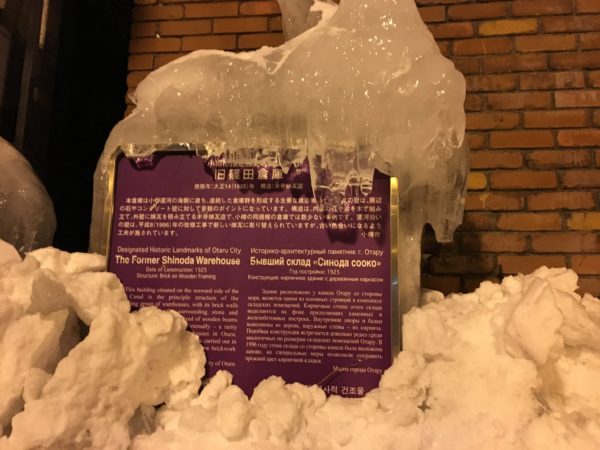
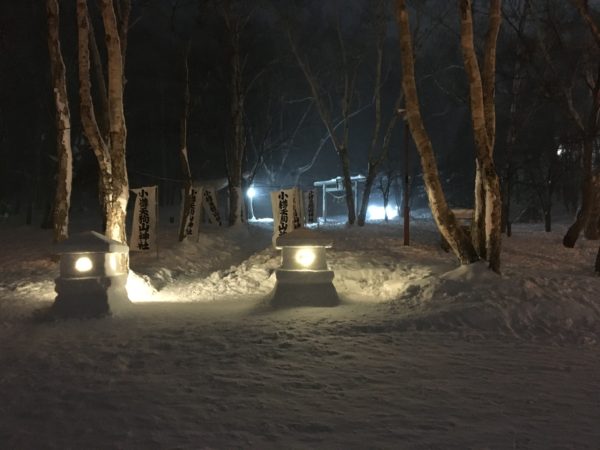
Although it was in the early 19th century that Hokkaido became a part of Japan formally, it had been always recognised by Japan, and one feudal lord of Matsumae was given the right to conquer and control it by the practical leader of Japan, Hideyoshi Toyotomi in the 16th century. However, there were already native people who are called Ainu, so they could not avoid conflict over the land.
After it was integrated into Japan officially, the Meiji (the first era in which Japan opened to the world and started following Western ways) government encouraged the people to relocate there. Since it was very wild with lots of brown bears and snow, the pioneers had a severe time. At the same time, it was the period when Western culture was being assimilated into Japan, and it was easier there, where traditional Japanese culture had not penetrated far. Thus some areas of Hokkaido have a somewhat western feel.
There are nice French restaurants and 44 of them have been listed in the Michelin guide (1 restaurant with 3 stars, 1 with 2 stars and 16 restaurants with 1 star) for 2017. And 416 restaurants are listed in total (3 restaurants with 3 stars).
The brief history of Okinawa as Japan
It had its own dynasty called “Ryukyu Kingdom” until the 19th century. The Ryukyu kingdom belonged to the Imperial Chinese tributary system alongside several Asian countries surrounding China, so its culture and systems were somewhat more influenced by China than Japan.
By the way, Japan has never belonged to any other countries… this is why Japan changed the title for the imperial leader from Ookimi (Great King) to Tennou (Emperor) in the 7th century to express the equality of Japan with China. One cheeky prince sent a letter to the Chinese Emperor to imply that Japan had no will to obey China, although Japan was nothing compared to such an advanced empire at that time, lol.
Anyway, so, at a glance, Okinawa was far from Japan, and it was a totally different country. However, it was invaded by Satsuma han (a kind of prefecture) of Japan in 1609, and was forced to give up the Amami region, which is still part of Kagoshima prefecture (formerly Satsuma). Amami came under the control of the Satsuma clan, however it still continued its tributary relationship with China at the same time.
In the late 19th century, the Ryukyu Kingdom was finally integrated into Japan formally, and was renamed to Okinawa after all of the “hans” of Japan were renamed (Edo ->Tokyo, for example).
During World War ll, Okinawa was the only place where people fought against American soldiers inside Japan (other cities were attacked and burned, but these were not battles).
1/3 of Okinawan people died due to this battle.
Since Japan lost the war, Okinawa came under control of the US, which lasted until 1972.
They have a certain kind of atmosphere – “somewhat new to Japan”
They are completely opposite in many ways, but they have one thing in common.
Their history as a part of Japan is relatively “recent”. Even though I can see the unique features, habits, and cultures of every region of Japan, I still find the the rest of Japan has something in common. This would be 2000 years of shared history – a history that Hokkaido and Okinawa do not share.
That’s why traveling to Hokkaido or Okinawa is something special— it is nearly the same thing as a trip overseas for Japanese people.
However, the feelings of their “newness” is different as well.
Although there is still the indigenous culture of the Ainu, in Japanese eyes Hokkaido has been something of a ‘new area’ since the 19th century.
This is because, for the most part, the dominant culture was established by the pioneers of the 19th century….I do not want to be misunderstood. Of course Ainu culture is carefully preserved at the same time. When I visited Vancouver in Canada, I visited the museum of native people’s culture. I guess things are similar in a sense between Hokkaido and North America. Ainu people still exist in Hokkaido, but they are a small minority and most of their descendents have inter-married with those of the pioneers and immigrants from the Japanese mainland.
On the other hand, Okinawa still looks very exotic to us. It maintains a lot of the Ryukyu Kingdom’s heritage, and they have many different customs, cuisines, and cultures. Their dialect sounds completely foreign to us (they usually speak standard Japanese to outsiders, but speak their language only among themselves occasionally…I suppose). Many of their family names are very specific to Okinawa as well. That’s because many of them are hereditary Okinawan.
So we find these 2 regions very attractive in markedly different ways.
What can you find in Hokkaido? (general ideas)
Hokkaido is big. Aside from the freezing and snowy weather in winter (Nov-early April), Hokkaido is totally different geographically. There are other cold regions in Honshu (The mainland of Japan) as well, but there are various kinds of natural beauty unique to Hokkaido.
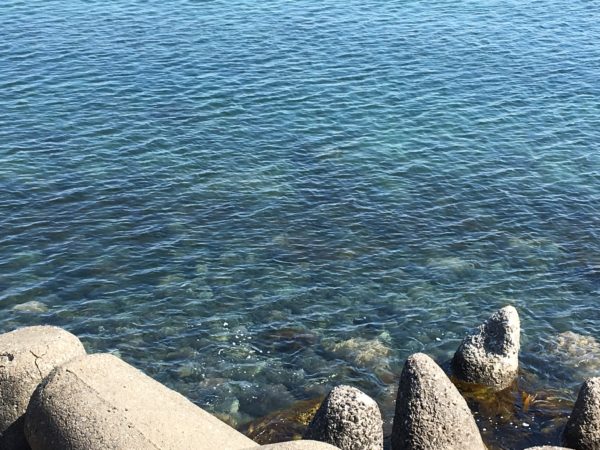
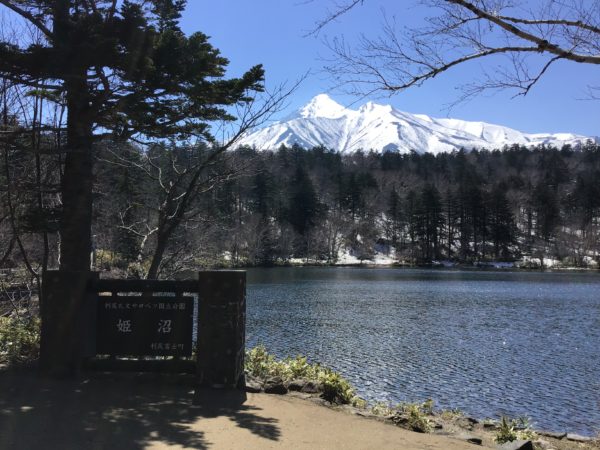
(Rishiri island of Hokkaido in late April this year)
Hokkaido is too big to explore all at once– I have only been to Sapporo (capital), Otaru, Hakodate, Wakkanai, and Rishiri island, but I need to visit 10 more places.
Among Japanese people, generally, delicious seafoods (sushi! and kaisendon….rice bowls with Sashimi), nice places for skiing or snowboarding, and hot springs are expected.

Sapporo boasts a wonderful snow festival every year. I visited there during the preparation because hotels are less expensive than during the festival period. You can see a lot of beautiful sculptures made from snow!

This is what I was dying for during my stay in Europe….
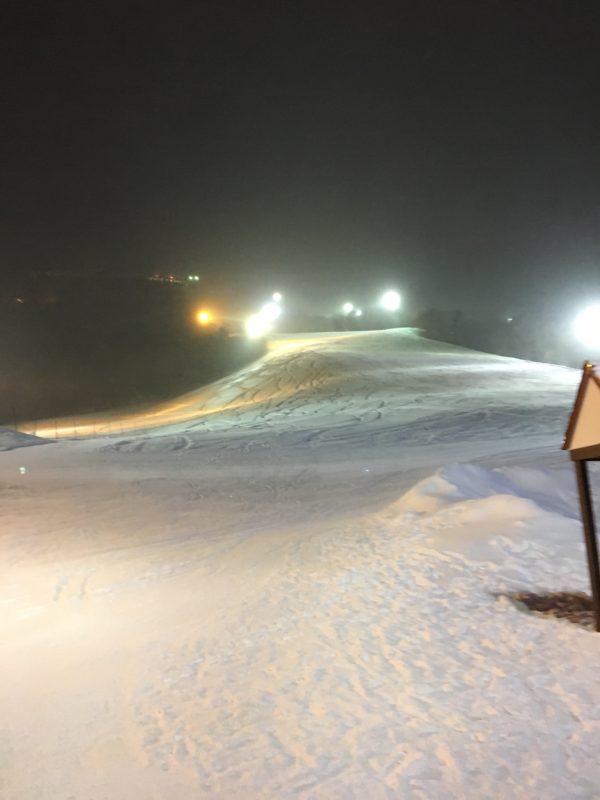 I don’t do skiing or snowboarding either, but there are many nice slopes throughout Hokkaido and even Scandinavian people travel to Niseko. (This pic is another place)
However, these things give too basic a picture of Hokkaido. I haven’t even reached halfway round the island yet so I will keep exploring and inform you here.
What can you expect in Okinawa? (general ideas)
Okinawa consists of many islands. I have circled the Okinawa region in red below.
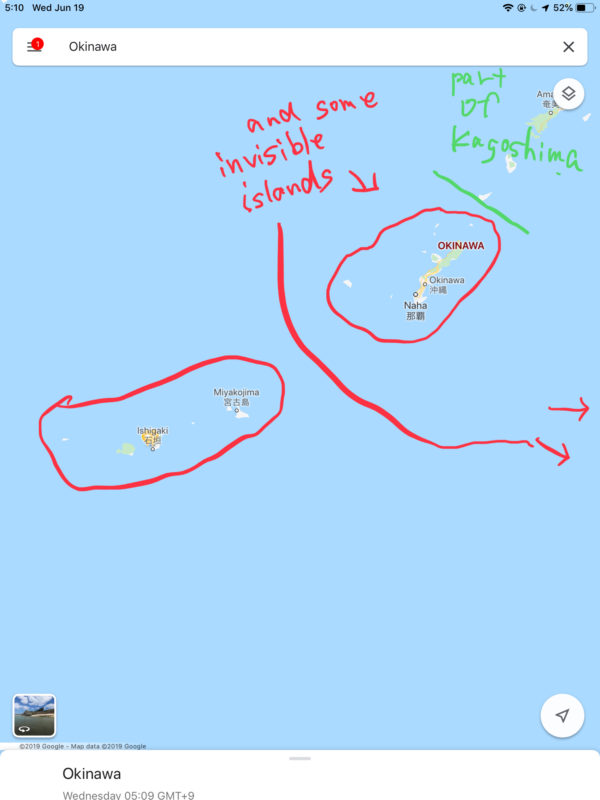
As you can see, Okinawa is located in the very south of Japan. So obviously its climate is tropical. So many people are fascinated by the beautiful oceans where you can see many coral reefs with tropical fishes – so am I.


I signed up for a one day tour last year, and it was wonderful!
But you can enjoy the beaches and coral reefs personally as well.
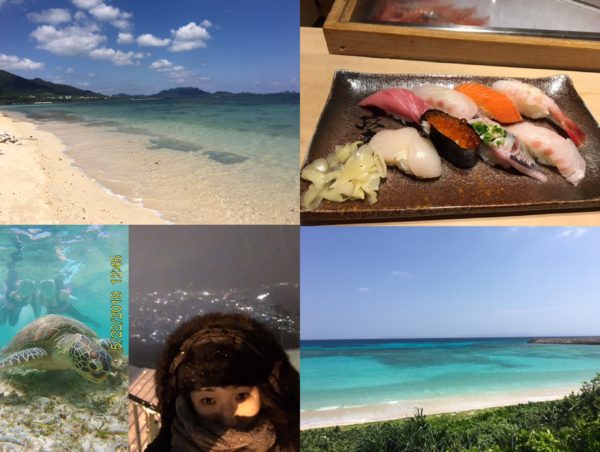
Here are the beach of Hateruma island, so peaceful.


This year, I went back to the same island and I found 4 turtles in total!

you can see how shallow the tide is, so it was quite easy to find them.
Yes, since Okinawa’s geography is a bit complicated, you need a guide. I will carefully give you the tips one by one.

Taketomi island. you can see the same style of houses throughout Okinawa. That’s Ryukyu style.
And don’t worry, Okinawa is delicious too.

I didn’t have an image of Okinawa as the place for Sashimi (raw fishes) or Sushi. So I found it funny to watch the Sushi chef from Okinawa in the film “Kill Bill”.
Why does the Okinawan person have to be a Sushi chef? Japan = Sushi? It’s too stereotypical!
That’s how I felt. I had a image that “Fishes become delicious in cold sea, so Hokkaido or other freezing areas should be far better than areas with tropical climates”
But I realised that I had been wrong. definitely wrong. You can have really fresh sashimi here.
 Furthermore, the noodles from Okinawa are very good, too. The texture of the noodles are completely different from the normal Ramen. This is also something you should definitely experience in Okinawa.
Now having read this article, you understand how passionate I am about these two regions.
I will keep you well informed here, so follow me!